
In brief
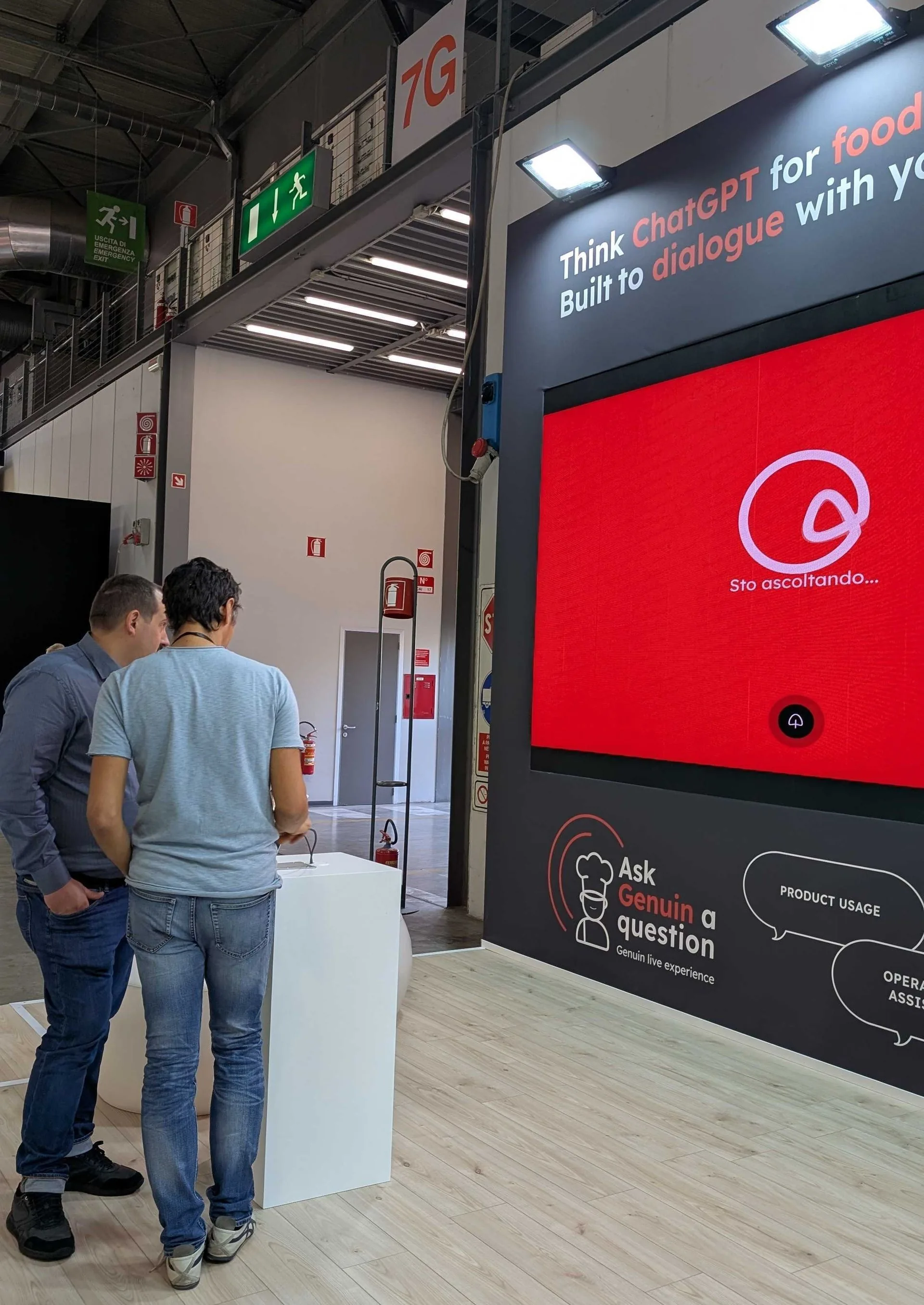
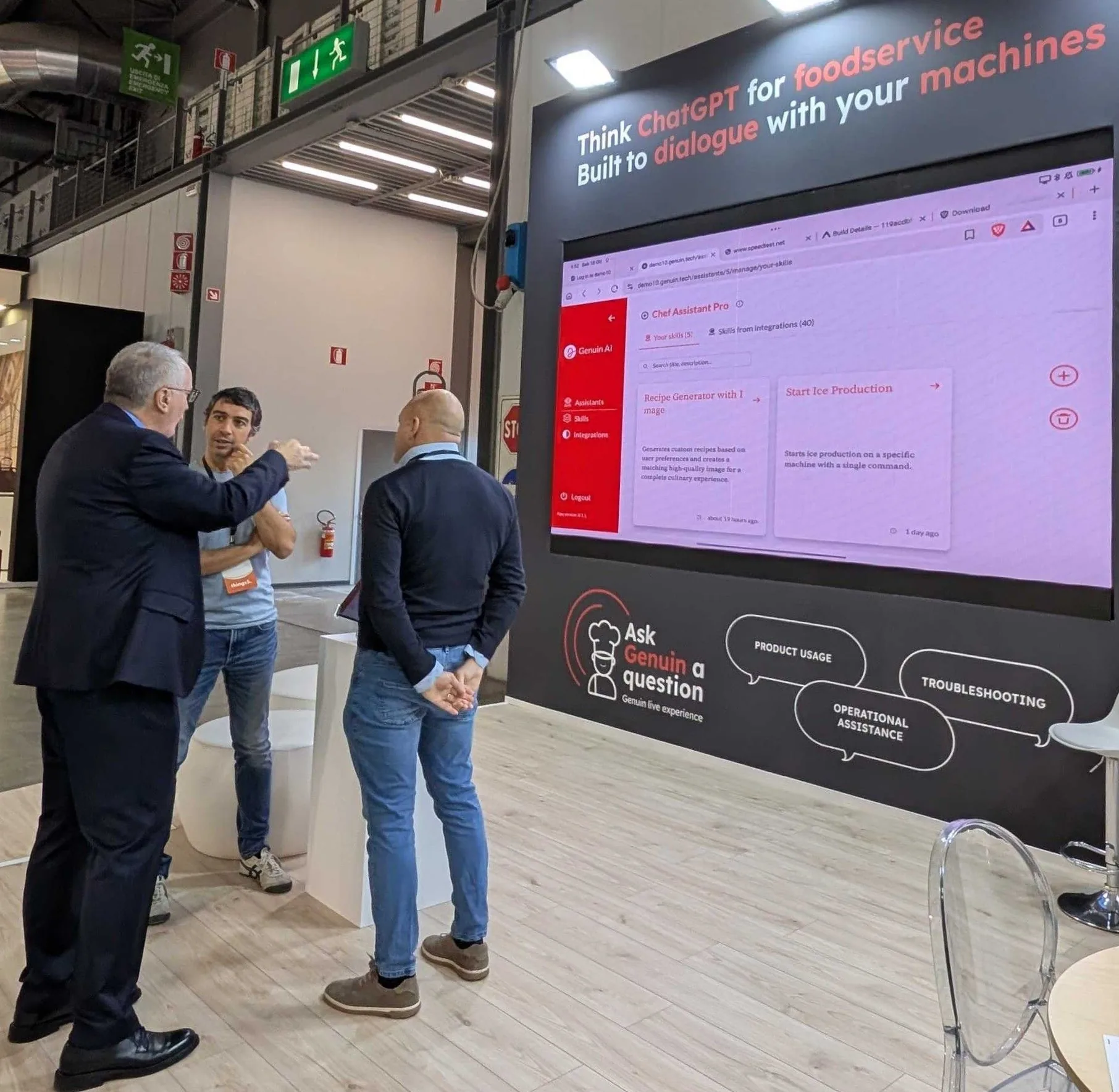
From 17 to 21 October, Genuin and DiChef, the Genuin application for foodservice, were at the center of the Things5 stand at Host. The international hospitality exhibition was the ideal opportunity to gather direct feedback from the market: manufacturers of professional equipment, restaurant managers and HoReCa operators were able to see the agent in action and assess its operational impact.
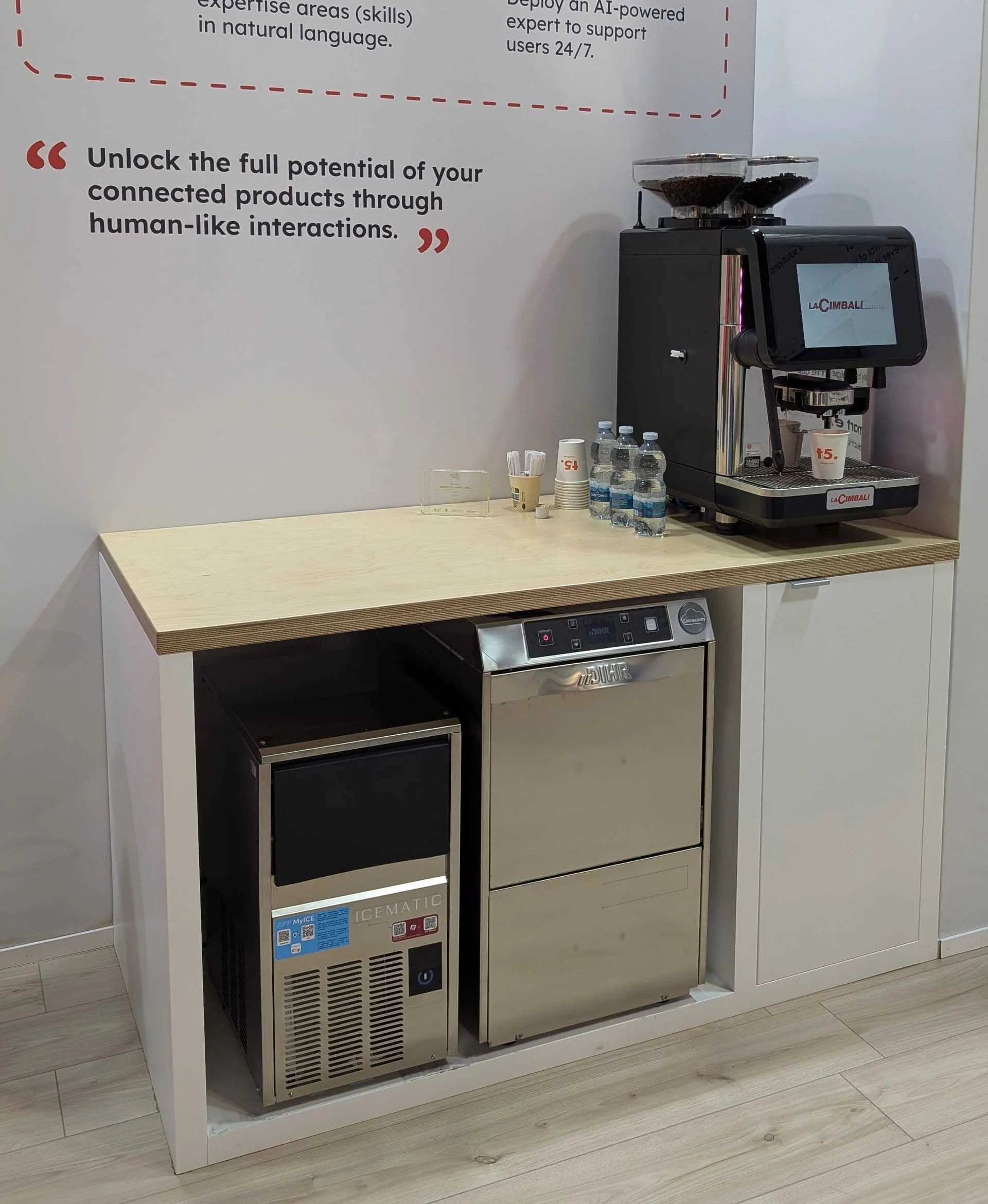
With three pieces of equipment on hand (an ice maker, a cup washer and a professional coffee machine) and the technical documentation of an oven, we showed how Genuin applies to many use cases: from equipment management to inventory control, all the way to day-to-day decision support in the kitchen. Having the appliances physically at the stand allowed us to recreate a real environment and demonstrate multi-device equipment management, highlighting how smooth the natural-language dialogue is and how interfaces that support the user step by step are generated instantly.
To make the experience as natural as possible, after a short introduction to the main use cases, visitors tested the agent on a tablet through the mobile app: a familiar tool that can be placed anywhere and has a built-in microphone for voice commands, keeping friction and learning time to a minimum.
Use case: Inventory management
Thanks to the integration with a database simulating pantry management software, we showed visitors how a natural-language request makes it easy to find out what is in stock, in what quantity and with which expiry dates. The assistant can also distinguish food categories (for example meat, dairy, vegetables) and can indicate where food is stored (pantry, fridge, freezer), if this was recorded when it was added, giving staff a single, up-to-date view to plan service and reduce waste.
Adding new food items is just as simple: you indicate the type of food and the quantity to add. If they are not given, the agent itself asks for details on the expiry date and storage location. This structure makes it possible to ask at any time which items are about to expire and get an easy-to-use list, which becomes the starting point for creating new recipes that help use up products in time.
Use case: Adding tasks to do
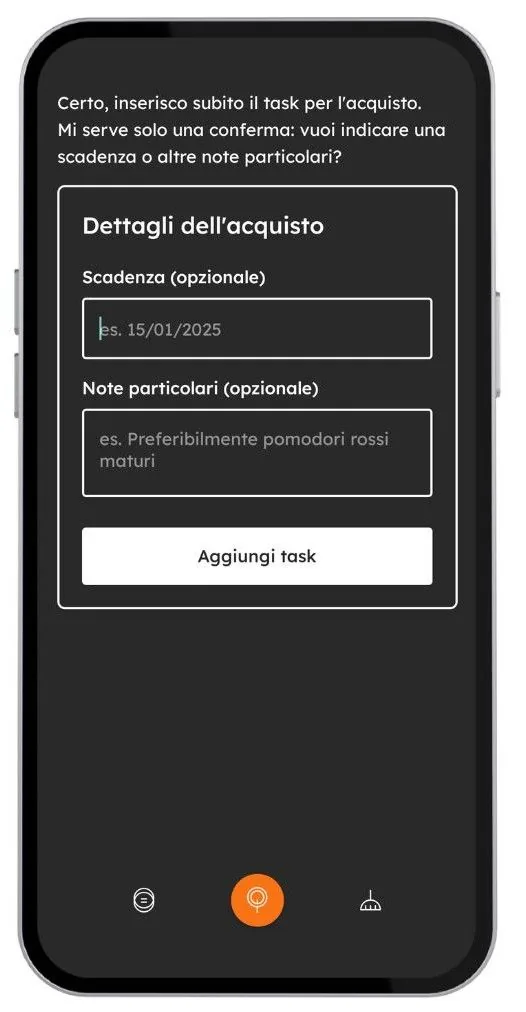
A second use case concerns task management through to-do lists, useful for organizing operational and administrative activities.
In the example, we asked the agent to add a reminder to buy vegetables from the greengrocer: starting from a generic request, the system automatically asks for the due date and the assignee, if they are not given.
This approach lightens the staff's mental load, making shift handovers and responsibility for each activity easier. Lists are updated in real time and managed by priority to help staff meet service times and deadlines and have a complete view of all the activities to be done; in addition, every task stays tracked, so chefs and managers can check its progress and improve coordination and decision-making speed.
Use case: Recipe suggestions
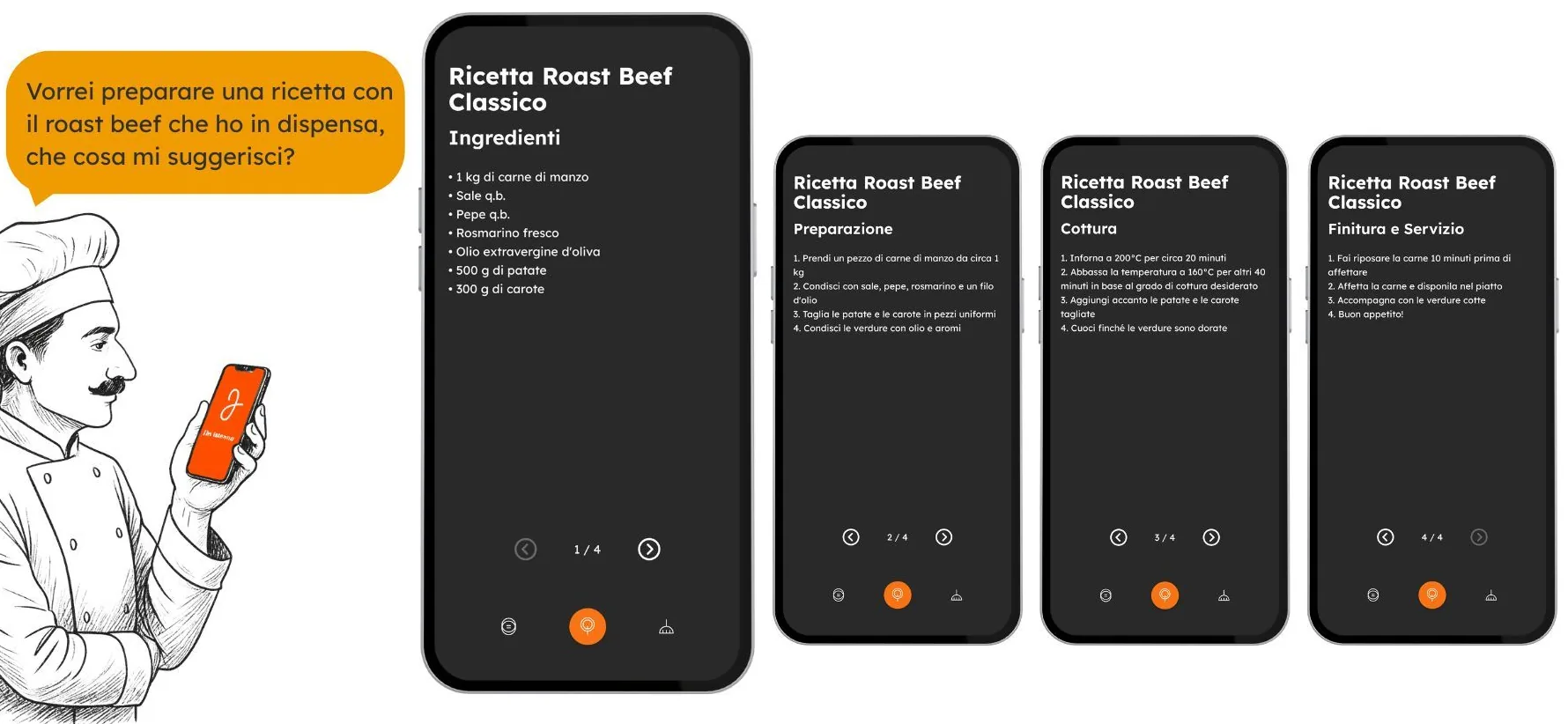
Now consider guided recipe suggestions. In terms of execution, the recipe is broken down step by step (ingredients, preparation, cooking, finishing/service) across several screens. The operator can therefore follow it quickly on the tablet, with a simple, sequential visual flow.
This approach is particularly useful for handling food that is about to expire. The agent can match what is actually in the pantry with the needs of the service and suggest recipes that use up the most urgent stock first, adapting quantities to the ingredients available. In a more advanced scenario, if ingredients are missing, the agent can suggest alternatives or add what is needed to the shopping list or to the cart of the integrated e-commerce store.
The ability to suggest recipes proactively can also make use of the recipes already loaded on a machine's IoT platform.
Take the coffee machine, for example. End users and professional operators very often do not know all the available recipes, so when a need arises ("I'm particularly tired today, I need an energizing coffee"), the language model analyzes the request and queries the MCP tools of the IoT platform to retrieve the full list of available recipes.
By matching the user's need with the recipe data, the system selects and suggests only the most relevant options, such as "strong" varieties rather than "soft" ones, offering a targeted solution.
Use case: Equipment control and management
The use case that most caught manufacturers' interest was equipment control and management through voice commands, a feature that turns the traditional paradigm upside down. Until now, it was the operator who had to adapt to the machine, learning its interfaces and functions. With Genuin, on the contrary, it is the machine that learns to talk in the user's language, without overloading them with information that is not relevant to their context and needs.
So in the example video we asked the agent to stop ice production, without having to open the IoT application or be near the equipment.
The operational benefits are immediate and tangible in terms of efficiency. Operators are able to handle several tasks at once, without having to move and interrupt another preparation on the other side of the kitchen. In terms of flexibility, long processes such as cooking or daily cleaning cycles can be started or monitored at any time and from anywhere, cutting downtime and ensuring that equipment is always ready for use.
Simplifying interaction with the machine does not compromise safety of use. Before executing a command, the assistant automatically checks the machine data through the integrated IoT platform, verifying the device status and the user's permissions. For every critical action, explicit confirmation is always requested, ensuring that every operation is safe.
Use case: Troubleshooting and support during use
Trained on the machine's entire technical documentation, the agent gives immediate answers to operators' support requests: it interprets an error code, guides the operator step by step through maintenance procedures or explains how to start a specific program. Users no longer need to look through manuals or wait for technical support; they can simply talk to the agent and get immediate support, just as if they had an expert colleague at their side, 24 hours a day.
From demos to future developments: why Genuin improves kitchen management
Host 2025 was a milestone for the development of Genuin and, at the same time, a new starting point thanks to the feedback gathered at the show. We showed operators and manufacturers how Genuin really breaks down the barriers between people and technology: natural dialogue, together with interfaces generated in real time, gives immediate access to machine functions, data and analytics from devices or kitchen management software, eliminating complex searches and frustrating steps.
One of the most appreciated aspects was certainly the agent's flexibility: it can move from controlling a machine to checking the inventory to suggesting new recipes, showing how a single interface can orchestrate the entire kitchen ecosystem. The result is a simpler, more efficient and more consistent operational flow, even when managing several locations.
At the same time, manufacturers recognized the ability to create, test and deploy new features simply by describing them in natural language in the editor as an innovation accelerator, essential for responding quickly to market needs and strengthening the relationship with the end customer.
Host has certainly given us the push for the next step: bringing Genuin's intelligence directly on board the machine to make interaction even smoother and more responsive.
Project funded by the European Union – Next Generation EU